Between Self-Defense and Revenge

The conviction of an Italian jeweler for killing two fleeing robbers underscores the contentious divide between self-defense and vigilante justice. By ruling that his disproportionate use of force constituted a crime rather than protection, the court emphasized that maintaining the rule of law requires rejecting extrajudicial retaliation, a principle that serves as a vital, if challenging, benchmark for both personal conduct and global geopolitical stability.
The Pantry

The historical evolution of the pantry, from its origins as a fundamental physical space for survival against environmental hardships to its current reinterpretation as a metaphor for financial planning during retirement, culminates in the realization that true human security lies in cultivating a legacy of imperishable values, the ultimate provision against the finitude of existence.
Mario Argollo and Donald Trump: Parallel (Wasted) Lives

There is a critical parallel between Mario Argollo, leader of the Central Obrera Boliviana, and Donald Trump, in that both have undertaken destructive social and geopolitical conflicts driven by questionable motivations and using similar strategies. After failing in their initial objectives and encountering unexpected resistance, both figures are seeking a negotiated exit to preserve their own political survival in the face of the attrition of their respective conflicts.
Paradoxes of “Dignified Death”

There are several contradictions within the debate on euthanasia, contrasting modern medicine’s success in prolonging life with the contemporary tendency to seek assisted death in the face of suffering. Examples include therapeutic obstinacy versus the desire to control the end of existence, and the dehumanization inherent in comparing a dignified death to the putting down of animals. Likewise, caring for the elderly and the terminally ill offers an opportunity for spiritual and human growth. Finally, concepts such as “quality of life” are relative to each culture and, from a Christian perspective, the natural process of dying and the mystery of pain hold a profound value.
Lourdes

Lourdes is much more than the 72 miracles certified in 167 years since the apparitions of the Virgin to Bernadette Soubirous in 1858.
Lourdes, an important Christian destination, is characterized by its purifying water, its spiritual climate of peace and ceremonies such as the torchlight procession.
In addition to physical healings, the author experienced personal “other miracles”: a reunion with a Bolivian friend in Paris, an unexpected seat at a packed Mass with cancer survivors like himself, and the miraculous recovery of a lost hearing aid. A prayer for the healing of Bolivia from populism could not be missing, trusting in a change with the new government.
The “resurrection” of the dire wolf

This column is about the “de-extincion” of dire wolf specie and the implications of this scientific goal.
Electric cars in Bolivia: an obstacle course
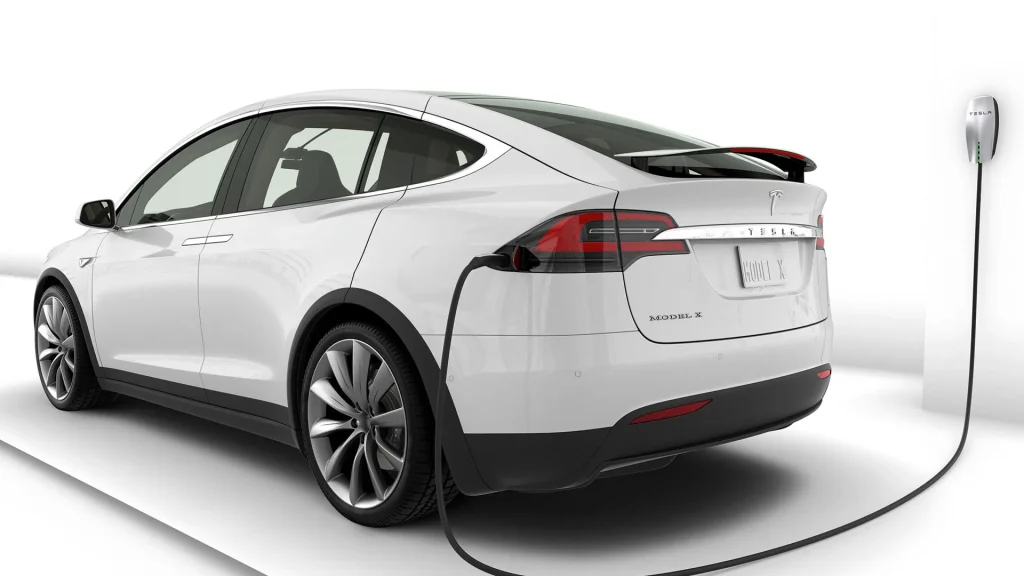
The fuel crisis in Bolivia has two structural solutions, in the sense that both aim to reduce the demand for liquid fuels. The first is to convert cars with petrol engines to CNG (Car Natural Gas). The irrefutable convenience of this conversion for the user and for the State has already been demonstrated and I will not repeat it (See: https://nuevositio.fzaratti.blog/en/2024/12/06/sell-low-to-buy-high/). The other solution is electromobility, which consists of replacing a petrol vehicle with a 100% electric car, or “hybrid” if it runs on electricity and petrol. The economic convenience of a 100% electric vehicle, with current energy costs, is evident if we compare the consumption to travel 400 km (40 liters of gasoline in the city) with its electric equivalent (45 KW-h). The 40 liters of petrol (the cheapest) represent 150 Bs, while the equivalent cost of electricity (with house tariff) does not reach 60 Bs: a saving of 90 Bs (and time in queues at the pumps) for users and 336 Bs for the State for that petrol that is no longer imported. Well, if everyone wins, what prevents a massive shift to electromobility? In general, there is a lack of a clear energy transition policy. There is a well-known misunderstanding about the implications of this policy (which is an urgency, rather than an option), reduced to simple reductions in customs tariffs that do not affect the high prices of electric cars. This policy ranges from massive electricity production with renewable energy sources (hydroelectric and solar, “first and foremost”), to a financial plan to encourage the transition to electromobility, through infrastructure to facilitate the transition, with a non-statist approach, but open to private initiative. To write this column with full knowledge of the facts, in the last few days I wanted to explore the possibility of buying an electric car. My conclusion is that buying an electric car is a real obstacle course. First of all, there is the prohibitive price: almost 100% more than the equivalent of gasoline. This is basically due to economies of scale and a lack of real incentives. As far as the financing of the purchase is concerned, although some banks offer attractive conditions (credit in national currency for eight years with fixed interest), the scrapping of the petrol car that is stopped is not contemplated. If there were a program to receive the petrol car as a down payment, the credit would quickly pay for itself, thanks to energy savings, especially in public service or heavy-use vehicles. The question: “what to do with used petrol vehicles?” could be answered by moving them to the provinces, in competition with cars that continue to be illegally interned. In addition, the high price has consequences on the cost of insurance and taxes, although some incentives have been announced during the first three years of use. Finally, the issue of charging is complex: for a home, the 100% electric car is equipped with an inverter from AC to DC and a special charging plug. But if you live in an apartment, you need to find an outlet near your parking lot (when actually every parking lot should have one) and place a certified meter (at your expense), the inverter, and the charging plug. This is until the family rate can be applied. Nor what about the precarious charging infrastructure in public spaces (charging stations). We need entrepreneurs to invest in this sector and a State that stops being a “dog in the garden” if we want electric cars to become popular.