Bolivia and the Vatican Between Two Centenaries

Some milestones in the relations between Bolivia and the Vatican over the past century are described, from the appointment of the first nuncio to the renewed form of coexistence in our days.
Bolivia and the Vatican: From Symbiosis to Full Relations (1877-1925)

The evolution of diplomatic relations between Bolivia and the Holy See between 1877 and 1925 passed through stages of collaboration, strong controversies, and the establishment of full relations. Two figures stand out for different reasons: future Cardinal Pietro Gasparri and Internuncio Rodolfo Caroli.
Relations between Bolivia and the Vatican: An Approach to Their “Prehistory”

This article examines the “prehistory” of diplomatic relations between Bolivia and the Holy See (1825–1877). Through a review of key milestones, such as the failed ratification of the 1851 Concordat, it concludes that it was only in 1877, with the appointment of Monsignor Mario Mocenni, that the beginning of bilateral relations was formally consolidated, thereby establishing the starting point for the forthcoming sesquicentennial of this diplomatic relationship.
Between Self-Defense and Revenge

The conviction of an Italian jeweler for killing two fleeing robbers underscores the contentious divide between self-defense and vigilante justice. By ruling that his disproportionate use of force constituted a crime rather than protection, the court emphasized that maintaining the rule of law requires rejecting extrajudicial retaliation, a principle that serves as a vital, if challenging, benchmark for both personal conduct and global geopolitical stability.
The Thucydides Trap and Bolivian Politics

The Graham Allison’s “Thucydides Trap”—the historical tendency for established powers to clash with rising ones— is applied to analyze contemporary challenges in Bolivia, specifically regarding political governance and the energy transition.
The Perfect Storm for YPFB: Between Internal Sabotage and Global Chaos
Bolivia stands at a crossroads: caught between YPFB’s inefficiency and a global crisis pushing crude oil to $100, Rodrigo Paz’s government faces the dilemma of choosing between the hunger of inflation or the plague of a deficit. With no strategic reserves or foreign currency, the only real way out is aggressive energy diplomacy and a gradual transition toward renewable sources to break the dependency on hydrocarbons.
Four Years of Energy Terror

In the war sparked by the invasion of Ukraine four years ago, Russia employs energy terror by destroying the Ukrainian power grid, causing massive blackouts and a humanitarian crisis in -20°C winters. Ukraine responds with drones targeting Russian refineries, reducing oil production and worsening their fiscal deficit. Energy is a human basic need; energy terror should be outlawed as a crime against.
Seven lies about lithium contracts

It is my intention to refute some claims that the state-owned lithium company (YLB) does not dare to defend publicly.
Welcome denialism!
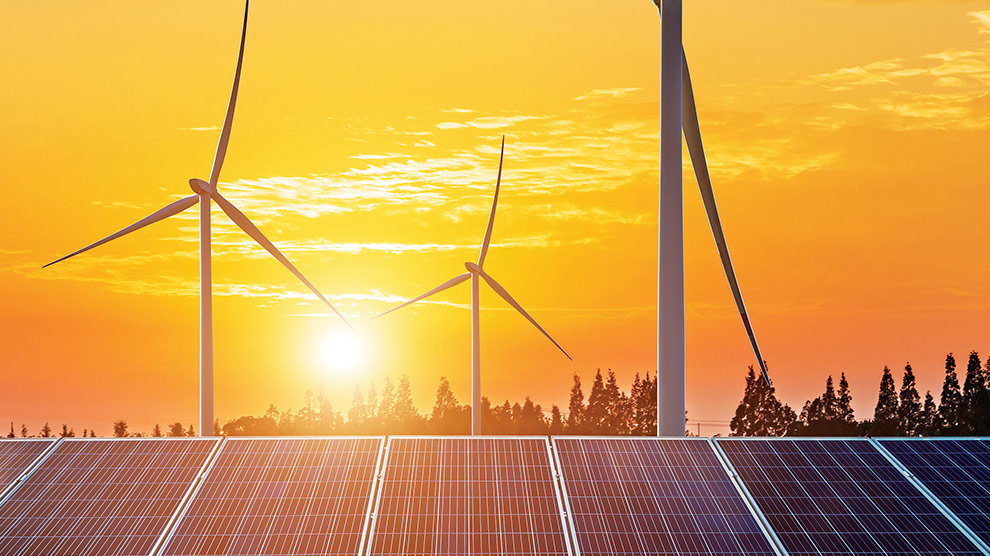
With the arrival of Donald Trump in the White House, a political earthquake has been generated that has its aftershocks in the energy field. To the cry of “Drill, baby, drill”, regulations, decades-long policies to diversify the energy matrix and global goals to reduce the disastrous effects of growing greenhouse gas emissions have been ignored. While the goal seems economic (to monetize their abundant fossil resources), the arrogant tribe of deniers is dancing for what they see as an endorsement of their anti-scientific theories. In fact, the main goal of the deniers (there are even some in Bolivia!) is the Energy Transition (ET) which would presumably be close to a resounding failure. For starters, there is no such “final blow” to the “famous and banal” TE (as they write) for the change of tenant of the White House. With the data for 2022 and 2023, it is possible to say that, globally, the European Union (EU) generates between 22 and 25% of its consumption with renewable energy sources (hydroelectric, solar, wind, geothermal, etc.), a percentage lower than the reviled China (30-35%) and similar to the United States (20-22%). Similarly, the EU consumes electricity from nuclear reactors in 25-30%, more than China (5%) and the United States (18-20%). By the way, the mistake of the deniers is to proclaim that renewable sources intend to replace fossil fuels overnight, when in reality there is an internal TE of fossil fuels that seeks to eliminate the combustion of coal, reduce oil consumption and keep the supply of natural gas stable, as a transition fuel. In the specific case of the EU, the Russian invasion of Ukraine has slowed down, but not stopped, ET because, in the face of the cut-off of Russian gas, it has forced investments to be diverted towards the purchase of expensive NLG from the US, not to mention growing spending on armaments. I don’t want to think about what would have happened to the EU if it had not secured 50% of its supply from non-fossil sources. In reality, the Energy Transition will continue to develop, albeit at different speeds, despite the denial tendencies of Climate Change and private interests, due to the environmental consciousness of society that is constantly growing and due to technological advances in the energy sector in favor of the efficiency and competitiveness of clean energy. In short, sustainable energy transformation is an inevitable path and will continue to advance in the future. So far, ET seems to be an ethical choice based on responsibility for the “common home” of humanity, a choice that the climate upheavals that are observed daily help to reinforce. But the situation in Bolivia is completely different. I never tire of repeating that for Bolivia, ET, more than an option in favor of the planetary climate, is a necessity and an urgency. And if you don’t believe me, look around today to see the consequences of the short-sightedness and incompetence of the MAS governments, unable to develop an adequate energy policy for the country. These governments, instead of denying the destruction of the energy sector caused by the nationalization of hydrocarbons and increasing the supply of fuels by spending and borrowing as much as they can, should have long ago embarked on a serious plan to convert transport to methane and to encourage the use of electricity produced from renewable sources. For not having done so, we now have endless queues at gas stations, with the consequent economic, social and psychological cost that is testing people’s patience for a failed economic model and a government in a coma.
Lithium contracts: a desperate bet

This column is a general analysis on the Lithium contract for YLB, the nacional lithium corporation, with Uranium One Goup, a Russia Based company.