Between Self-Defense and Revenge

The conviction of an Italian jeweler for killing two fleeing robbers underscores the contentious divide between self-defense and vigilante justice. By ruling that his disproportionate use of force constituted a crime rather than protection, the court emphasized that maintaining the rule of law requires rejecting extrajudicial retaliation, a principle that serves as a vital, if challenging, benchmark for both personal conduct and global geopolitical stability.
The Red Lines of Social Conflicts
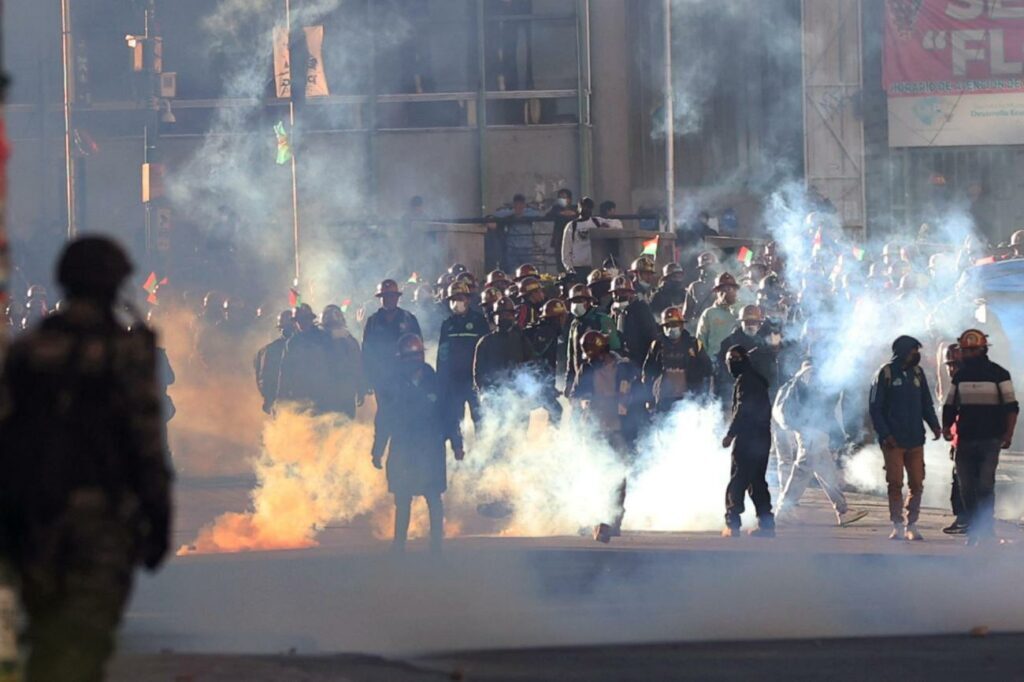
In the social conflict currently ravaging Bolivia, the government seems to have paradoxically opted for non-violence in the face of the extreme aggression of the mobilized sectors. Given Bolivia’s experience in this matter, it seems sensible to set some “red lines” for protest. If these red lines are crossed, the weight of the law, through trials and compensation for damages, must fall with full rigor upon those responsible for overstepping them.
Paradoxes of “Dignified Death”

There are several contradictions within the debate on euthanasia, contrasting modern medicine’s success in prolonging life with the contemporary tendency to seek assisted death in the face of suffering. Examples include therapeutic obstinacy versus the desire to control the end of existence, and the dehumanization inherent in comparing a dignified death to the putting down of animals. Likewise, caring for the elderly and the terminally ill offers an opportunity for spiritual and human growth. Finally, concepts such as “quality of life” are relative to each culture and, from a Christian perspective, the natural process of dying and the mystery of pain hold a profound value.
The Church’s contribution to the construction of Bolivia

On Bolivia’s bicentennial of independence, the article emphasizes the Catholic Church’s pivotal role in shaping the nation’s identity since before its founding, spanning education, social works, communication, culture, art, and science. Through publications by the Bishops’ Conference and the Catholic University, the Church’s missionary essence is highlighted, including training professionals in institutions like Fe y Alegría and Escuelas Don Bosco, preserving indigenous languages and cultures, creating media, and defending truth and democracy. It has provided social assistance to the marginalized where the State falls short, despite some human failings. Described as a precious jewel, the Church’s enduring legacy shines brightly in Bolivia, though not without flaws.
The Order of Love

About the interpretation by US Vice President JD Vance of the theological concept of “ordo amoris” -the order of love- and its application to migrants deportation.